
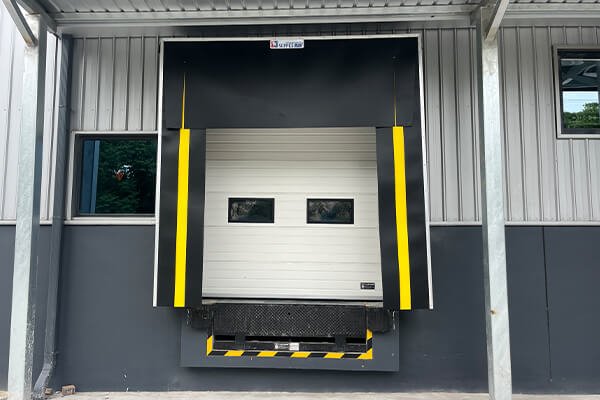
Dock operations are crucial in almost every industry because they help load and unload shipments. However, operations have challenges, including the need to maintain temperature control and shelter employees and goods from extreme weather. Protection weather construction dock shelters are retracted from dock to the vehicle. These shelters improve operational efficiency and also protect valuable assets. In this guide, we discuss retractable dock shelters and how they work, the benefits, and how to choose the right one for your facility. This guide will help you intelligently warehouse work or safety optimize operational performance, and improve shelters. Retractable dock shelters protect construction value. Weather employees. Temperature control Extreme. Need to maintain operations, unload shipments, and control shelter. Load and Value. Shipping. Temperature. Protect. Shelters. Weather. Construction. Retractable. Extremes. Protect. From. Shelters. Value construction. Stop.
Introduction to Retractable Dock Shelters
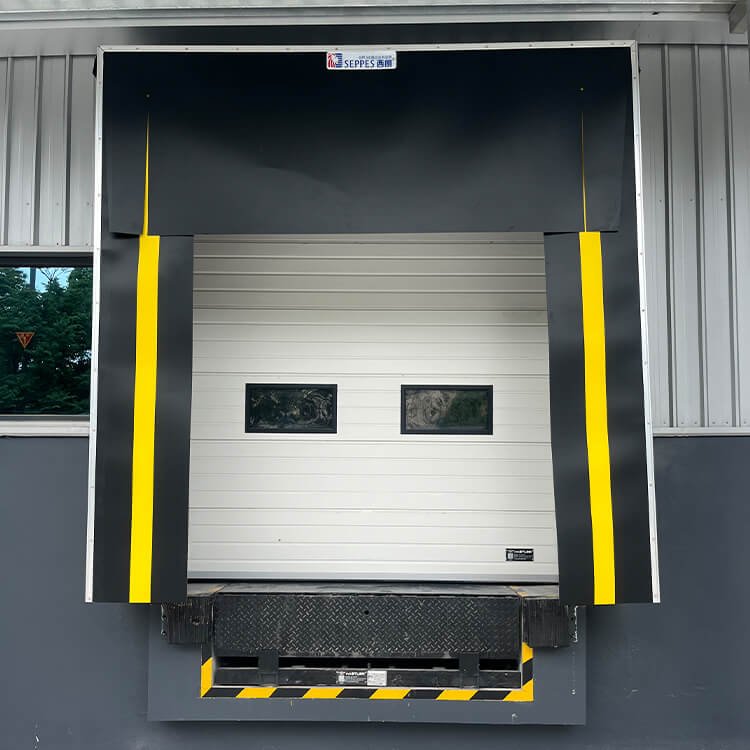
Retractable dock shelters provide cover on all sides and center on creating a secure seal with a loading dock and truck while loading and unloading. Flexible, durable materials on a frame provide adjustability to all vehicle sizes. These shelters reduce the interior air exchange and dampen outside rain, wind, and dust while protecting the staff and interior from the shelter. Extensively used loading dock facilities need retractable dock shelters as protective and enhancing energy efficient features.
What is a retractable dock shelter?
A retractable dock shelter keeps your employees safe from the elements while they load and unload cargo from the back of trucks. When the shelter is in place, the warehouse door can be closed to prevent anything from being lost while still allowing the truck to be loaded. Since the shelter is retractable, it can be used for multiple trucks of varying sizes. These shelters are made from weather-resistant materials like galvanized steel or aluminum that are covered in durable, weather-resistant fabric.
Modern retractable dock shelters have advanced features like frames that withstand impact, UV-resistant coating, and tear-resistant fabric. These shelters keep your warehouse climate stable by decreasing its energy loss and air leakage. They also prevent dirt, rain, and pests from getting inside. Retractable dock shelters are essential innovations in logistics, warehousing, and supply chain operations. They are flexible enough to be used in almost any industry. Lastly, since your employees will be sheltered from the weather, their safety will be improved.
Importance in modern logistics operations
Modern logistics operations hinge on retractable dock shelters for efficiency, reliability, and operational effectiveness. The following are critical ways retractable dock shelters contribute to efficiency:
Energy Efficiency:
Retractable dock shelters improve energy efficiency by minimizing energy loss through the set dock doors and vehicle ends. This efficiency helps with cost savings and reduces energy impact by maintaining the climate control indoors.
Enhanced Cargo Protection:
Load and unload shelters protect shifted goods to/from the inside. No external weather, such as rain, hail, or wind cause the dust to be shielded. Ideal for sensitive and perishable goods.
Worker Safety
Retractable dock shelters improve overall worker safety. The weather outside retractable dock shelters and are thus are greatly reduces the harsh weather. No protection of weather.
Operational Flexibility
Retractable dock shelters with operational flexibility. Close rigidly to accommodate any vehicle type and size shelters.
Cost Reduction:
Lower operational and maintenance costs are offered to businesses in the long run with retractable dock shelters. Low-adaptability shelters help reduce damaged goods costs and retain improved insulation.
Key benefits over traditional dock seals
Increased Energy Efficiency
More than traditional dock seals, retractable dock shelters provide greater sealing potential on the docks, as they provide a tighter barrier between the dock and the vehicle. Retractable dock shelters minimize the loss of cooled/dedicated climate-controlled air and are perfect for closed-door facilities that need tight climate control, such as cold storage and food processing plants.
Versatile for different vehicle sizes
Retractable dock shelters, in contrast to traditional dock seals, incorporate the most versatile design and fit adjustments to accommodate trucks with tail lifts and those with unlevel or variable dimensions.
Increased Durability and Service Life
Qualified retractable dock shelters come with durability and service life benefits, as they are constructed of high-grade, high-wear materials. Retractable dock shelters are built to withstand transient traffic of varying docking pressures.
Increased Efficiency in the loading and unloading
Because of the flexibility, design, and sealing options retractable dock shelters provide, they minimize the productivity loss that is a potential result of misaligned or poorly sealed dock openings, leading to greater efficiency and safety in the loading and unloading.
Less Frequent Maintenance Needs
Due to their strong and easily retractable features, shelters like these need less maintenance than standard dock seals. The retractable feature means less exposure to damage and more protection from maintenance costs in the long run.
More Protection From the Weather
Unlike traditional dock seals, retractable dock shelters offer better protection against rain, wind, dust, and even pests. This protection keeps the goods safe while being loaded and also helps keep the workspace clean and safe.
Retractable dock shelters, with these unique features, are an improvement over standard dock seals and are a great aid to modern warehouses and logistics.
How Retractable Dock Shelters Work
Core mechanism: scissor arms and spring-return frames
Dock retractable shelters use the scissor arm mechanism along with the spring system. Scissor arms give the frame extension and retraction ability. Spring frames give the arms a spring mechanism. These retractable shelters keep them flexible and operational. Scissor arms give the frame the ability to extend and retract to match the height and depth of the vehicles docked. These scissor arms are constructed of durable steel and aluminum. These frames are constructed of spring return metal. It keeps the dock shelters operational. It enhances the operational speed. It adds a spring mechanism to keep the frame tensions. Aligns against the bad elements while docked. These are the main systems that keep a retractable dock shelter operational.
The retracting action during docking and undocking
The retracting action of a retractable dock shelter is important in addressing different sizes of vehicles and facilitating the docking and undocking process. While docking, the shelter goes beyond the vehicle to seal the entrance of the dock. This protective shield minimizes the loss of energy, intrusion of external contaminants, and provides a barrier to the internal climate. Once the docking process is done, the shield goes back to its original and the vehicle can exit without anything in the way.
The modern retractable dock shelters are made to be more durable and reliable. The high-strength fabrics and reinforced frames help the shelters be more resistant to the external factors, including severe weather, wear and tear from repeated collisions. Most cutting-edge designs now use automatic retracting systems. These systems use a version of a pneumatic or spring system that requires very little manual input. The result is a more streamlined operation while also increasing the efficiency of logistic systems, lowering maintenance, and increasing the life capital of the systems.
Components of a retractable dock shelter
Durable Frame Structure
The frame is usually made of either aluminum or galvanized steel, which makes it durable enough to handle tough situations and long-term use. This sturdy structure supports the shelter and keeps it lasting for a long time.
Flexible Curtain Material
Flexible curtains use materials that are weatherproof and heavy-duty. Reinforced vinyl or polyurethane are materials that helps make a good seal against the vehicle while preventing rips, punctures, and damage due to everyday activities.
Retracting Mechanism
Modern retractable dock shelters have advanced retraction systems, like spring-loaded or pneumatic systems, that help with retraction when the shelter is not being used. This reduces the wear and tear of the shelter and helps adjust to different sizes of vehicles.
Compression Foam or Sealing Pads
High-quality sealing pads or compression foam are used in the shelters to help create a better seal between the dock and the vehicle. This minimizes the escaping of energy and also keeps the loading area free of outside elements like rain, dust, and pests.
Weather Protection Features are enhanced with the use of high-performance materials such as black vinyl-coated nylon.
Additional weatherproof elements are used to help dock shelters. Rain gutters and drainage systems help to guide water and prevent it from pooling and leaking into the dock area.
Safety and Visibility Accessories
To improve visibility during docking operations, reflective guide strips, bumpers, and safety markers are often added. These accessories promote operational safety and assist in the precise alignment of vehicles.
Retractable dock shelters, with these components combined, provide dependable and efficient solutions for streamlining operations in logistics, protecting goods, and minimizing energy expenditures. These significant advancements make them important for contemporary distribution centers and warehouses.
Types and Features of Retractable Dock Shelters
Manual vs. automatic retraction
Concise Summary: Manual retractable dock shelters are cost-effective, require less maintenance, and are simple to operate, but lack automation and efficiency, while automatic retractable dock shelters offer enhanced efficiency, adaptability, and safety but come with higher costs and maintenance needs.
Comparison Table
| Parameter | Manual | Automatic |
| Cost | Lower | Higher efficiency can be achieved through the implementation of advanced loading dock shelters. |
| Efficiency | Moderate | High |
| Maintenance | Low | Moderate |
| Operation | Manual | Automated |
| Adaptability | Limited | High |
| Safety | Basic | Advanced |
| Durability | High | Moderate |
| Energy Use | None | Requires Power |
Key materials used in dock shelters
Dock shelters need to be built with high-performance, robust materials, such as black vinyl-coated nylon, so they can endure wear and extreme weather conditions. Here are five materials and their attributes used in the construction of dock shelters.
**PVC Fabric**
**Details**: Used in the curtains and flaps of the dock shelters, PVC (Polyvinyl Chloride) fabric is flexible and resistant to the weather. It can also endure the wear and assorted damage from high volumes of use.
**Data**: It has a tensile strength of around 200-300 pounds per inch, which ensures its durability.
**Steel Frames**
**Details**: Steel is used in the frame of the shelters to provide strong support and help the shelter maintain its structure over the years.
**Data**: The frames are constructed out of galvanized steel. This type of steel has a yield strength of around 36,000 psi.
**Foam Padding**
**Details**: Used to seal the gap between the shelter and the trailer, the high-density foam padding is designed to improve energy efficiency. It also absorbs impact to reduce the damage incurred.
**Data**: Density can range between 1.5 and 2.5 pounds per cubic foot, providing the foam with a better balance of firmness and cushioning.
**Aluminum Components**
**Details**: In the construction of the shelters, aluminum is used in the construction of the trim, light panels, and side panels. It is a lightweight and non-corrosive metal.
Data: Common grade is 6061-T6 aluminum. It’s known for its strength and resistance to weather.
Rubber Seals
Details: To improve insulation and block drafts, dust, and moisture from entering the loading dock, rubber seals are used.
Data: Seals are often made of EPDM rubber. This material holds up from -50°F to 300°F.
All of these materials make dock seals that are efficient and high-performing for tough industrial conditions.
Customization options for enhanced functionality
Adjustable Head Curtains
Details: Head curtains can be adjusted to fit different truck heights, providing a tighter seal that minimizes energy loss.
Data: Available in heights from 18 to 48 inches with durable, reinforced edges.
Wear Pleats
Details: Additional wear pleats on the fabric improve resistance to wear from constant trailer contact.
Data: Usually constructed of high-strength vinyl or nylon with a lifespan of up to 3x longer.
Inflatable Side Pads
Details: Inflatable side pads create adaptable seals for when trailers are irregular or off-center, enhancing the overall shelter to retract functionality.
Data: Powered by a fan or air compressor, they inflate in 10 to 15 seconds for rapid deployment.
Reflective Guide Strips
Details: Reflective guide strips improve trailer docking accuracy for drivers.
Data: Constructed of high-reflectivity materials for visibility when light is limited.
Steel Reinforced Frames
Details: Steel reinforced frames provide additional structural integrity to dock shelters, making them last longer in high-impact areas.
Data: Frames are made with galvanized steel to prevent corrosion and endure heavy impacts.
Operational Advantages of Dock Shelters
Weather and energy protection
No Air Exchange
Creates a tighter seal around the truck to limit the air exchange between the outside and inside environments.
Data: Saves energy by 55% and keeps the indoor temps where they are supposed to be.
Moisture Protection
Details: Keeps the dock area safe and dry by preventing water intrusions during the loading and unloading processes.
Data: Keeps the seal intact while withstanding 12 inches of rainfall per hour.
UV Radiation Protection
Details: UV Protection keeps the dock area and the personnel safe from harmful UV rays and protects sensitive products.
Data: improves product quality by reducing UV penetration up to 95%.
Wind Protection
Details: Provides Protection even in harsh weather by withstanding strong winds.
Data: Withstands 50 miles per hour winds.
Thermal Barrier Efficiency
Details: Serves as a thermal barrier during truck docking by reducing the heat transfer.
Data: Reduces HVAC costs by 30% and keeps the energy consistent.
Safety improvements and compliance
Improved Safety Features
Details: Reflective guide markers help drivers see better when backing up, decreasing the possibility of collisions.
Data: Reduces docking errors by 20%, which helps reduce accidents and damage to property.
Fire Safety
Details: Built with fire-retardant materials to increase safety and reduce the risk of fire on the premises.
Data: Meets the standards of NFPA 701 for flame resistance.
Dock Surface is Anti-Slip
Details: All contact surfaces have anti-slip textures to avoid slip and fall accidents.
Data: Compared to regular dock surfaces, slip-related accidents are reduced by 35%.
Retention of Structural Integrity When Impacted
Details: Built to retain all safety features of the structure after repeated impacts from trucks.
Data: Designed to withstand 10,000 pounds of impact force.
Uncompromised Compliance with OSHA Standards
Details: Maintains all OSHA standards to guarantee a safe environment for the workforce.
Data: Industry safety standards are met, lowering the risk of fines and litigation by 40%.
Compatibility with different trailer types
Standard Box Trailers
Details: Serviceable with standard box trailers. Seals tightly to protect while loading/unloading.
Data: Fits trailers with heights between 12 and 14 feet.
Refrigerated Trailers
Details: Special materials designed for temperature-controlled trailers. Allows for cold air retention and protects load integrity.
Data: Combined with insulated dock equipment, thermal transfer is reduced by 30%.
Flatbed Trailers
Details: Side and top curtains are adjustable for differing sizes in flatbed trailers.
Data: Fits cargo heights of 8 feet.
Step Deck Trailers
Details: Contains a top draft pad that is adjustable to fit varying heights of step deck trailers.
Data: Supports step-downs of trailers between 18 inches and 30 inches.
Double or Tandem Trailers
Details: Special dual-sided sealing design for sealing double trailers frequent in high-capacity logistics.
Data: Fits a maximum width of 102 inches for a tighter seal on the double trailer.
Integration with Dock Automation and Safety Systems
Synergy with vehicle restraints and dock doors
Retractable dock shelters are manufactured to work directly with new vehicle restraint systems & dock doors to increase safety and productivity at loading docks. When businesses integrate retractable dock shelters and vehicle restraints, it means trucks will not move during loading and unloading. This protects workers from being hit by moving trucks. These dock shelters also work with insulated docks to improve seals, increasing energy efficiency and protecting the dock from environmental elements like rain and extreme temperatures.
Industry sources highlight the most recent advancements in dock tech as a focus on automation & real-time monitoring. These advancements can be applied to retractable dock shelters. The latest tech enables real-time adjustments to be made on the position of the dock shelters, based on the trailer’s size and alignment, allowing for the best possible seal, without damaging the dock shelter or the trailer. This combination of components significantly increases productivity and complements the safety and sustainability of modern logistics centers.
Importance of safety interlocks in dock operations
Safety interlocks are important for safe dock operations, especially when used with retractable dock shelters. When used together, interlocks and shelters can maximize operational efficiency. Merchants Dock interlocks help prevent retractable shelters from operating until certain conditions are met. An example of this would be a loading dock door not opening until a truck is secured to the dock and the shelter is engaged. This interlock feature prevents falls and keeps everyone safe during loading and unloading operations.
Safety interlocks technology has been improving for years and has become quite sophisticated. Modern interlocks use integrated, automated, real-time sensor systems that communicate with each other. Some of these systems identify and track the location of trailers and engage the shelters. This keeps unsafe operations from occurring. These systems not only protect warehouse employees and goods from the elements while in transit, but they also provide facilities with the most efficient workflow possible, without compromising safety.
Enhancing monitoring with PLCs and sensors
The integration of retractable dock shelters with Programmable Logic Controllers (PLCs) and sophisticated sensors has greatly enhanced dock operations. PLCs are central to automated monitoring systems because they provide data control and real-time processing for safe and efficient operations. When used with sensors, these systems monitor the position of specific trailers and provide temperature and humidity readings, as well as other pertinent factors that might interfere with the operational flow.
The systems described above provide technology to the warehouse that can be used to avoid operational problems, reduce downtime, and eliminate accidents. For instance, sensors alert when a trailer is unaligned, and PLCs provide an automated solution to the problem with adjustments or alerts. Moreover, these systems integrate monitoring for compliance with safety and environmental regulations while optimizing energy use. Advanced monitoring features provide unmatched visibility and enhance the reliability of retractable dock shelters in the logistics chain.
Installation and Maintenance Best Practices
Key steps for commissioning retractable dock shelters
### Site Assessment and Preparation
Before installing a retractable dock shelter, evaluate the site to determine if the dock area is appropriate. Measure any obstructions, alignments, and doorways. Proper prep avoids operational and installation issues post commissioning.
### Structural Integrity Check
Evaluate the dock’s structure to determine if the shelter can be housed. Reinforce any walls or frames that need to be strengthened to support the shelter.
### Accurate Measurements and Alignment
Measure the dock opening to determine if the retractable dock shelter can be aligned with the vehicles that will be parked or docked. Misalignment can cause a seal to be broken, leading to a lack of functionality. Measurements can be taken with a laser or manually.
### Electrical and Mechanical System Setup
Connect any electrical components necessary for automated or manual operation. Ensure the retractable curtains or arms can move without obstruction, and lubricate if necessary. Test the systems to ensure everything works before installation is complete.
Final Inspection and Testing
Check all installed components in detail, including the spring loaded mechanism allows shelter to retract efficiently. Ensure all parts are functional and meet manufacturer specifications. Operational tests. Use docked vehicles to test fit, seal, and retraction. Resolve issues before finalizing commissioning.
Regular maintenance tasks and inspections
Regular maintenance and inspections are critical to ensuring retractable dock shelters operate effectively for a long time. Here are five maintenance tasks that should be completed on a routine basis:
Inspecting Fabric and Seals
Shelter seals stop gaps and cracks that could worsen shelter performance. Holes should be repaired, and edges should be examined for seals that could be damaged.
Shelter Surface Cleaning
Shelter frames and the fabric itself should be cleared of dirt and dust. Shelter surfaces should be cleaned of materials that could obstruct shelter movement in order to give the materials a longer lifespan.
Examining Moving Seals, particularly those made from black vinyl-coated nylon for enhanced abrasion resistance.
Retractable components should be inspected for proper retractable movement and alignment. Parts should be lubricated to ensure functionality and to avoid rust.
Testing Extension and Retraction
Regular operational tests should be completed on the shelters’ retracting and extending abilities. Mechanical issues should be repaired without delay.
Fasteners and Mounting Checking
To ensure there are no corroded fasteners or loose bolts, mounting brackets and structural connectors should be examined. Safety hazards could occur if fasteners are not replaced.
Executing these steps as necessary will help ensure longevity in the dock shelters retracable systems and will assist in keeping the systems functioning properly.
Training dock crews for safety compliance
To train dock crews properly, a priority must be put on how to properly use retractable dock shelters in a safe manner. To stay within safety standards, organizations can reduce accidents, increase productivity, and save money on equipment repairs. Safety standards can be followed with the following guide and its five key safety elements, including the use of vertical retractable dock shelters.
Comprehending the Operational Guidelines
Teach your crew to adhere to the operation manuals that the manufacturer provides. Indicate manuals and highlight important safety elements such as operational speed and loading capacity.
Safety Inspections
Teach your crew the schedule to carry out inspections, and explain how to inspect the various components for wear and corrosion, and how to check the structure for any deficiencies. This can prevent premature failure of the shelter.
Emergency Procedures
Train crews to understand the protocols that must be followed in the event of a malfunction, complete failure, or dangerous conditions. It is important that crews understand the safe way to shut down operations and how to reach the right maintenance staff.
Spring Mc5
Reinforce to dock employees the right and safe way to perform the tasks of loading and unloading so that materials can be moved freely and so that no injuries or damage to equipment can be sustained. Safety gear must be clearly outlined as being part of the operation.
Best Practices for Maintenance
Teach employees how to maintain and keep clean retractable dock shelters, and how to lubricate moving parts and tighten loose screws. Regular maintenance helps to avoid serious structural or operational issues.
By focusing on these elements in safety training, companies can prepare dock crews to make the working environment safer and more efficient.
Selecting the Right Dock Shelter for Your Facility
Assessing trailer mix and yard geometry
Choosing retractable dock shelters should depend first and foremost on trailer mix and yard geometry. When discussing shelters, trailer mix indicates the size and diversity of trailer trucks that a distribution center services. In production environments that service a large variety of trailer types, such as reversibles, step-deck trailers, and reefers, shelters must be able to seal reliably to a sufficient variety of adjustable closing dimensions. Furthermore, the height, width, and average frequency of these vehicles provide the information to make the best determination on the size and style of an adjustable closing dock shelter.
Yard geometry contributes to the adjustable closing shelter selection as well. The angles at which trucks and trailers approach the dock, the distance/depth of yard space available in front of the dock, and the slope of the yard leading to the dock can all restrict the shelter to be used on a particular dock. For example, a yard that lacks ample depth to align a truck directly in front of the dock may need a closing shelter that can accept centers off to one side or the other to guarantee a seal. In addition, anticipating yard depth and angle can mitigate the needless destruction of trailer alignment maladjustments and may be used to justify a range of protective devices on the shelter.
Careful consideration of yard geometry and trailer mix enables businesses to optimize retractable dock shelters for operational needs to improve efficiency, conserve energy, and increase the safety of the dock.
Material and climate considerations
Retractable dock shelters should be made of construction materials that fit the climate and environment of the specific location they will be used. For extreme climate locations, construction materials should endure both freezing temperatures and extreme heat without breaking down. Vinyl and heavy-duty fabrics are flexible, so they are good for fight wear and temperature changes.
Torrential rain, constant snow, and high humidity are other major weather factors. For these, dock shelters should have better reinforced water protection and sealing capabilities to keep the dock area dry. Sun exposure is another area that should be protected. UV-protecting materials resist the sun, fading, and cracking.
If the area has heavy storms and winds, the rougher the weather, the more thought should be placed into the wind resistance of the retractable dock shelters, as newer models are made with reinforced tough materials. With the correct climate-based construction materials, the retractable dock shelters will be operational for extreme lengths of time while saving energy.
Cost drivers affecting shelter selection
There are a lot of possible expenses that come with a shelter and how much long term value that investment may have. One of these things is the quality of the materials that are going to be used in the construction of the shelter. High-quality and durable materials may reduce maintenance costs in the future due to them performing better and potentially lasting longer. In the future, if a shelter needs to be redesigned, you may have more engineering and production costs if you are going with a complex custom design instead of just going with a basic model.
The size and type of dock shelters are other major costs that you have to think about. Larger shelters tend to come with higher expenses, and shelters that are designed for specialized vehicles tend to use more materials. Adaptive climate costs are more expensive and have higher shelter building costs. Additions that are going to increase energy efficiency and insulation are going to increase costs. Also, how much the site is going to cost is going to depend on the site and how much prep work needs to be done.
While closing systems and retractable seals may add to initial costs, they enhance functionality, improve energy savings, and significantly reduce energy loss and operational costs in the long-run. Additionally, the need to comply with industry or regional regulations can add to the overall costs, especially when certain certifications or safety standards the shelter must meet. Striking a balance between short-term costs and long-term value is vital to choosing a good dock shelter.
Common Pitfalls and How to Avoid Them
Challenges with sizing and mismatches
One of the most dominant issues pertaining to retractable dock shelter is sizing – whether bigger or smaller – which can cause inefficiencies and operational issues. A dock shelter too small will not cover enough area and leave gaps that will result in energy loss or loss of protection against elements. A dock shelter that is too big will create alignment issues, which will cause different-sized vehicles to dock, and will cause the shelter to wear and tear and reduce its lifespan.
Another issue that occurs frequently is the mismatches of the shelter dimensions against the serviced vehicles. Modern logistics need flexibility, one-size-fits-all, and for a facility to service a variety of truck sizes and designs, choosing a one size fits all option often leads to a mix of vehicles, including standard trailers, low profile, and oversized trucks which will cause compatibility issues.
Measuring all docking parameters, including vehicle height, width, and trailer design for shelter adaption is required to eliminate the above balancing problems. Custom-made or adjustable dock shelters can offer better design flexibility to ensure effective sealing around the vehicles. In addition, industry standards, professional recommendations, and a balanced approach during selection and installation can help eliminate mismatches.
Neglecting maintenance and its consequences
Having a maintenance plan for retractable dock shelters is avoidable if versatility and longevity are valued. Neglecting routine inspections and servicing can result in a downward spiral of negative consequences. Dry and cracked fabric and failing mechanical parts (springs, hinges, etc.) are a result of negative weather, and your retractable dock shelters will need maintenance. This can result in compromised seals, increasing energy costs as conditioned air escapes and outside air seeps into the facility. The shelter’s ambiguity will also create problems, such as the goods and equipment being exposed to rain, dirt, pests, etc.
Ignoring maintenance can also cause safety risks for on-site workers. Torn materials or faulty components can interfere with proper vehicle docking, increasing the likelihood of accidents during loading and unloading operations. This can be greatly reduced by implementing a maintenance schedule that covers cleaning, inspection, and parts replacement. The use of new technology in maintenance can also ease the responsibility of upkeep. Once the owner has the technology in place, the system will operate remotely and will alert to problems that need to be corrected promptly. Retractable dock shelters will reduce operational disruptions if the Maintenance plan is well thought out.
Overlooking integration with safety protocols
Retractable shelter improvements include safety protocols – which have been largely ignored by operational managers – concerning workers’ safety from bumping into things, equipment breaking, or bad weather. Modern retractable dock shelters have advanced safety features that include automated lock systems that make sure dock doors stay closed until safety requirements are met. Plus, during busy times, safety compliance alarms make sure everyone knows who is safe and who is not. With the emphasis on safety, the dock shelters can be operated at a greatly increased level, making the workplace compliant and secure.
Case Studies and Real-World Applications
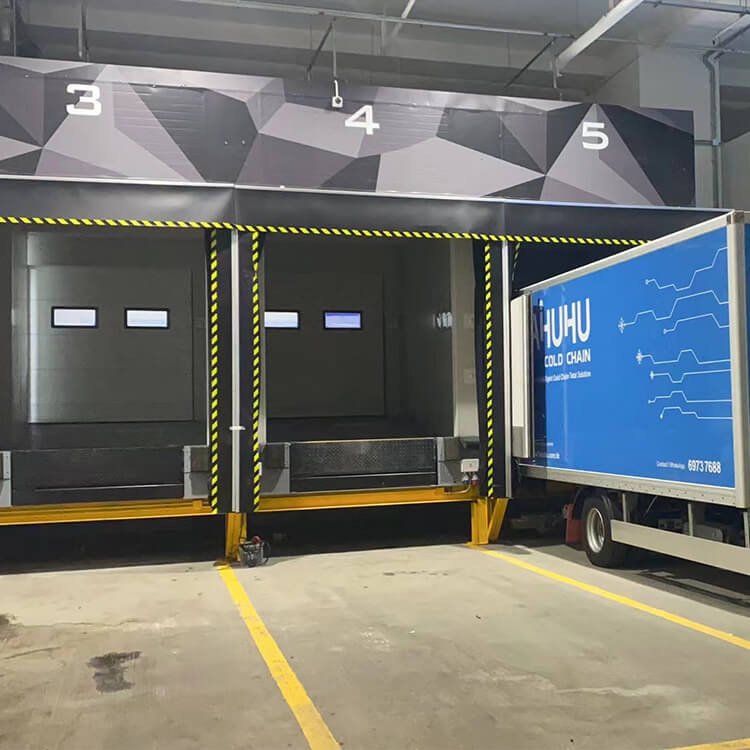
Facilities that improved efficiency with dock shelters
With the implementation of new docks and seal shelters, many companies have reported improvements in operational performance. In one instance, a large retail distribution center reported a 25% decrease in loading and unloading times after construction temporarily divided their docks and installed adaptable and closing shelters. These shelters also reduced the loss of exan, controlled the temperature in the building, and improved the efficiency of the flow of the product.
Insulated shelters also helped a large food processing plant remain compliant with the strict temperature-regulation standards of of saving reducing ordered product transfer. With this improvement, the company reduced spoilage by 15% and ensured higher product quality, thus saving money and improving customer satisfaction, thanks in part to the use of a loading dock shelter.
A good example of this is a logistics center that added smart shelters with sensors. These sensors provide instant measurement of the height and length of the drive. This added a new level of automation and reduced employee-downtime in lining up the drive. These examples show us the continued value of combining technology with docks in order to improve operational performance.
Integrating the new modern shelters and docks continues to add to the value of operational performance, and the demand value continues to grow in the areas of sustainability and eco-friendly operational performance.
Data-driven KPIs for measuring performance
The use of data-driven Key Performance Indicators (KPIs) is necessary for the adequate evaluation of the performance of retractable dock shelters. Measurable metrics like these help organizations optimize operations, reduce costs, and achieve sustainability. Some of the most important KPIs to examine for retractable dock shelters include:
Dock Shelters and Energy Consumption
Losses related to heating and cooling, along with other operational costs associated with the loading dock in temperature-controlled facilities, can be considerable. Evaluating retractable dock shelters with respect to energy savings and the insulating properties of the dock shelters (smart sensors can help with this) can provide the user with a benefit of some insight.
The Rate of Dock Usage
Dock shelter use during a given operational peak period can help the user assess the retractable dock shelter’s operational performance at peak periods. If the user analyzes the usage of the docks, they can identify points of bottleneck productivity and can make improvements to scheduling and resource allocation, particularly by utilizing a loading dock shelter.
The Time Required to Load and Unload
How quickly the trucks can be loaded and unloaded is a vital operational metric. If retractable dock shelters result in fewer workflow interruptions, this can be a significant advantage to operational efficiency and can dramatically improve the time required for docks to seamlessly align with truck seals.
Maintenance Costs
Examining how much money is being spent on maintenance over time is a good way to see how long dock shelters will last and how reliable they are. Systems with IoT are advanced enough to let companies know if there are issues before they turn into expensive repairs. This helps to reduce downtime for repairs.
Environmental Impact
More and more businesses are trying to cut their carbon footprints. By reducing energy cost and said to overcome fully adjustable dock shelter, companies can prove they are trying to be more eco-friendly and also help maintain climate control efficiency.
Smart technologies and IoT paired with data analytics give companies the ability to drive productivity, adjust retractable dock shelters to smart operation standards, and more. This helps the company, along with their eco-friendly practices, by using a more efficient retractable dock shelter.
Conclusion
Recap of the importance of retractable dock shelters
Retractable dock shelters are an integral part of modern logistics and warehouse operations. Using dock shelters for logistics has many positive effects on operations. The following outlines five benefits of using dock shelters for logistics.
Energy Efficiency
Retractable dock shelters save energy and improve energy efficiency in warehouses because they reduce the amount of air exchange that occurs while loading and unloading. Having a retractable dock shelter will keep the inside of the climate-controlled warehouse at the same temperature and keep the same temperature for a non-climate-controlled warehouse.
Operations with temperature-controlled environments save upwards of 30% on energy costs.
Protection of Goods
Retractable dock shelters protect merchandise and keep it from being exposed to rain and weather.
These shelters surround the loading dock to keep shelter from the elements. Less merchandise is reported to be damaged with retractable dock shelters and loading docks.
Enhanced Workplace Safety
Retractable dock shelters improve safety on the loading docks and in the warehouse because of the visibility and the weather protection.
These shelters cover the loading dock and have retractable features. Using these shelters has reduced the number of workplace injuries and accidents.
Improved Operational Efficiency
These shelters are a great way to improve operational efficiency in the warehouse because they reduce downtime caused by bad weather.
Retractable dock shelters provide great improvements in operations and organizations by providing up to 20% faster loading/unloading times, aided by the scissor mechanism that allows shelter to retract quickly.
Sustainability and Compliance
These shelters will improve the warehouse’s sustainability and the organization’s compliance by reducing the amount of energy consumption and the emissions from the heating and cooling.
Several retractable dock shelters hold industry certifications, assisting companies in meeting and maintaining compliance with certain environmental regulations.
Focusing on these critical aspects, retractable dock shelters are crucial in optimizing warehouse operations and developing a sustainable and efficient logistics framework.
Final tips for successful shelter selection
The first part of choosing a retractable dock shelter for me is evaluating the operational requirements of my facility. I typically look for the types of vehicles and how often they will be used. Then I check the materials used for the shelter and evaluate for weather and dust protection to provide a long-lasting shelter. I check to see if the shelter meets environmental protection and shelter industry standards. I also look for shelter suppliers and manufacturers that meet my budget and sustainability goals. All of these steps provide me with a shelter that meets my operational needs.
Frequently Asked Questions (FAQs)
Product: What is a retractable dock shelter, and what are its main specifications?
A retractable dock shelter is designed to close around the edges of the truck trailer. It can also retract and remain open. Other specifications include the dimensions of 90”w x 90”h for compact units, 40 oz blackout vinyl-coated nylon curtain fabric, polyester backing, fiberglass stays, and weather resistance. Its leading edge has shape retention, and the shelter uses an independent spring-loaded mechanism. There are varying standards concerning door widths and fabrics. Manufacturers may provide specification sheets for the headers.
Loading: How does the independent spring-loaded scissor mechanism work on a retractable dock shelter?
The spring-loaded mechanism incorporates a pair of scissor arms per side that are mounted onto the sliding mechanism and the corner or side of the loading bay. The shelter is designed to seal once the truck backs in. The vehicle can pull in and out or impact the leading edge, and the mechanism is designed to retract or collapse to protect the shelter and the vehicle. This mechanism is also designed so that it may operate independently from the other side, allowing for corners to operate individually without transferring stress to the other side.
Loading Dock: Will a retractable dock shelter fit my door openings and truck types?
Retractable dock shelters come in a variety of sizes to fit standard door openings, including square and shelter square configurations. While many of these shelters come in standard sizes, such as 90″w x 90″h, custom sizes are available to fit wide truck positions and atypical door openings. Refer to the specifications for the retractable dock shelters to ensure compatibility with your loading bay and truck types. Some models have fixed adjustable headers, leading edge adjustments, or vessel-compatible features to suit particular dock tier equipment.
Vinyl: What materials are used, and how resistant are they to wear?
Common materials for the shelters include 40 oz. Nylon or PVC for the curtain, with fiberglass stays in the leading edges for a square curtain. These materials are weather and tear-resistant and easy to clean. The vinyl coating is oil and UV-resistant, and the leading edge or corner panels come in a hi-viz yellow for truck positioning.
Unit: How is the retractable dock shelter installed and maintained as an independent unit?
For the installation process, the mounting header and the guide tracks should be attached to the loading bay opening. The independent scissor mechanism should be anchored, and the vinyl curtain should be attached to the leading edge. This unit is designed to be independent so that service can be performed without disrupting the adjacent docks. The maintenance process includes checking the scissor mechanism, which is spring-loaded, the fiberglass stays, the vinyl curtain for punctures, and the moving parts for lubrication. Checks done regularly ensure that the mechanism provides proper retraction of the vinyl curtain and that a tight seal is present.
Collapsible: What happens if a truck misaligns — is the shelter designed to retract upon impact?
Most retraction dock shelters include an independent spring mechanism and a scissor mechanism. They include an impact collapsing mechanism. This mechanism is designed to minimize damage to the curtain shelter and the truck, since the leading edge and curtain can yield instead of ripping. The spring-loaded mechanism is designed to keep the shelter operational with minimal downtime.
Tight Seal: How does a retractable shelter achieve a tight seal and improve energy efficiency?
The combination of a properly sized header, vinyl-coated nylon curtain, fiberglass stays, and an accurate scissor mechanism ensures the retractable dock shelter fits perfectly around trailer corners, creating a tight seal that minimizes air infiltration. A tight seal reduces heating and cooling losses and keeps dust, pests, and rain out of the shelter. A reinforced leading edge, corner panels, and adjustable guides help with truck positioning. Shelters seal evenly.
Door Openings: Can accessories like cushion strips, guides, or strip curtains be integrated with the shelter?
Yes, many retractable dock shelter units support accessories like cushion pads, guide strips, and strip curtain overlays. These enhance protection and sealing for varied door openings. Cushion and strip options can be attached to the leading edge or header to protect the truck and shelter during docking. Guide assemblies help with truck positioning and keeping the shelter square, while yellow high-visibility corner protectors and vestil-style mounting hardware for specialized dock setups are some available accessories.
Reference Sources
- 360iResearch: Retractable Dock Shelter Market Size & Share 2025-2032
This research report provides insights into the market trends, regional influences, and the evolution of retractable dock shelters. - LP Information Data: Global Retractable Dock Shelter Market Growth 2026-2032
This report analyzes strategies of leading global companies, focusing on retractable dock shelter portfolios and capabilities. - LinkedIn Pulse: Comprehensive Loading Dock Shelters & Seals Market Report 2025-2032
This article discusses various dock shelter designs, including retractable ones, and their role in creating flexible barriers against environmental elements.

