
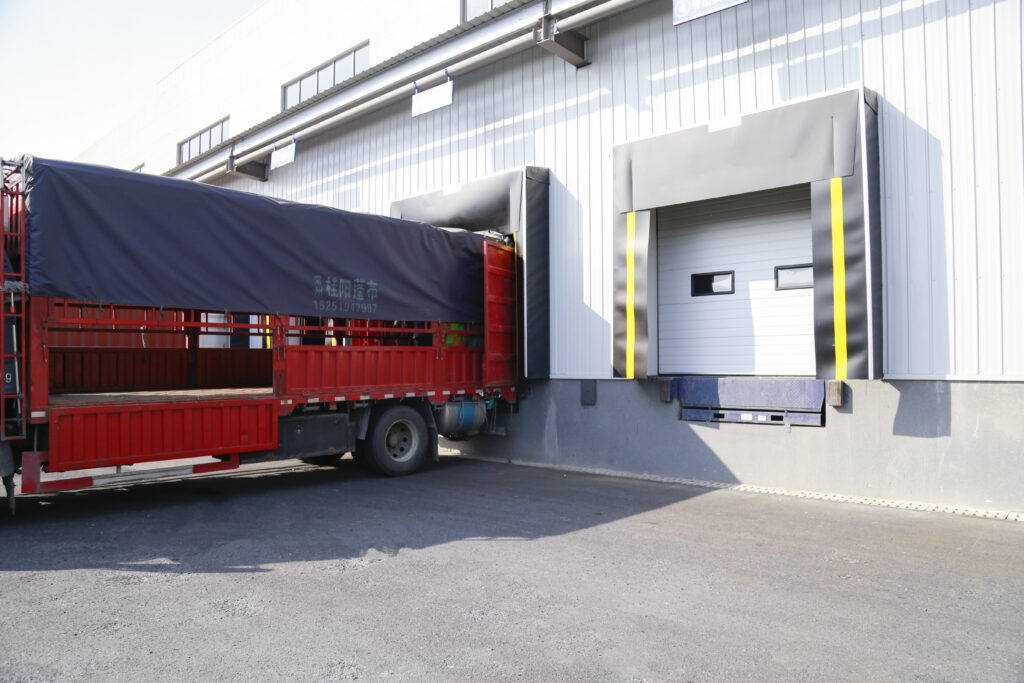
The loading dock is a key component to help streamline the functionality of your facility. However, a loading dock can be prone to a multitude of types of inefficiencies, destruction, and safety risks without the proper equipment. That is where loading dock shelters come into play. These structures serve as a seal between the docked trailers and the rest of your facility. These shelters help operational efficiency, the conservation of energy, and safety at the workplace by providing a complete seal at the top and sides. In this post, I am going to talk about the advantages dock loading shelters bring to the protection of your facility, the protection of the team, the processes made more efficient, and the processes that became safer.. Stay tuned to learn about the most important advantages and the considerations you must make in order to pick the correct option for your company.
What Are Loading Dock Shelters?
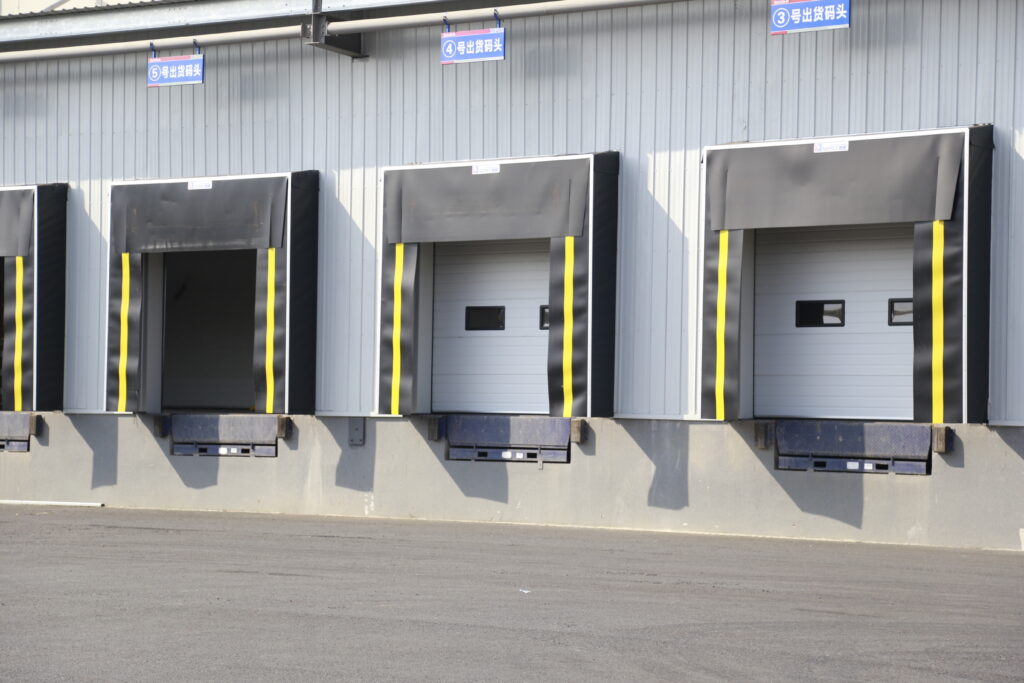
A loading dock shelter is used to fill the gap between a docked trailer and your building. These structures protect externally from rain, wind, dust, and even pests. All of which could spoil cargo when loading or unloading. Shelters also support indoor climate control, minimizing energy loss and improving comfort for employees.
Definition and Purpose in Modern Logistics
Dock shelters are important for proper functioning and maximizing efficiency for contemporary logistics and functionality operations. They are meant to keep the seal between the loading dock and the vehicle. This seal allows for optimum condition handling of the goods. Below is a list of five key details that define the function of loading dock shelters for modern logistics.
Protection Against Weather
Loading dock shelters protect against any form of rain, snow, and wind from the area that is docked, as well as a form of sunlight. This also ensures that any goods that need to be loaded and unloaded are not wet and do not cause any form of contamination.
Energy Preservation and Climate Control
Docked loading shelters guarantee the maintenance of the trailer and the facility’s indoor temperature as a result of closing the gap. This also helps in the reduction of the air that is lost, the cost of providing heating and cooling, and the resources that are used for operations.
Enhanced Hygiene and Safety
Contaminants, including dust and pests, are kept out of the docked area of the warehouse. This is vital in the case where goods that are being kept are sensitive to storage or have the ability to perish, for instance, food and pharmaceuticals, or electronics.
Improved Workflow Efficiency
During loading and unloading, productivity is boosted and delays in the supply chain are lessened due to loading dock shelters, which ensure a controlled and less dangerous setting in the workplace. Shelters also assist in intercepting outside disruptions.
Cost Reductions and Sustainable Operations
Loading dock shelters boost the operational life of vital infrastructure, which in turn minimizes the ongoing savings and maintenance costs. The shelters do so by eliminating the exposure of the facility and dock equipment to harsh weather.
Such shelters are crucial for logistics facilities that want to maximize efficiency while enhancing workplace safety and minimizing costs due to those benefits.
How Loading Dock Shelters Work
Dock shelters protect the space between the facility and a truck or trailer while loading or unloading. It seals the back of the truck or trailer entry point while the truck is reversing. When the truck backs up, the heavy-duty shelter and the truck’s inner fabric press together, creating the entry point, which will stop the water, snow, or other outside elements from getting inside the shelter area. Weather, safety, comfort, and work efficiency will be maintained while loading and unloading easily.
Also, the fabric easily and automatically changes for all vehicle shapes and styles, and so offers a gapless seal without any shelter or vehicle damage. Also, moving the internal outdoor air is important for the climate-controlled spaces, and air is crucial for the storage. There are features of climate-controlled spaces that make loading dock shelters a protector for operations and environments.
Key Features and Benefits of Loading Dock Shelters
Weather Protection for Goods and Personnel
No matter the weather, loading dock shelters provide effective weather protection while also keeping the comfort of the employees in mind. For the protection of the materials, comfort of the employees, and safety of the personnel, these shelters offer five features.
Durable Materials Constructed
These dock shelters provide impermeable protection against rain and wind and insulating protection against snow and extreme temperatures. Constructed of reinforced vinyl and industrial-grade fabrics, these dock shelters are remarkably durable and require little maintenance.
Seal Tight Construction Design
To stop floods and also to retain the safety and comfort of the personnel, the shelters utilize tight-sealing adjustable foam or inflatable dock pads. These pads seal and eliminate gaps to centralize the docking area and also to shield unwanted rain, debris, and dust, keeping the personnel and materials safe and dry within.
Sun Exposure
Using advanced materials with UV protection, these dock shelters shield the sensitive materials from the rain. Certain materials that are sensitive to rain are textiles, food products, and even pharmaceuticals that can deteriorate due to rain. These dock shelters shield away the UV rain so these sensitive materials can remain in optimal condition.
Water Control System
To alleviate the chances of flooding or water accumulation around critical loading zones, these dock shelters possess integrated drainage systems that redirect rainwater away from the docking area.
Wind Resistance
As these loading dock shelters are reinforced with frameworks, these structures can withstand high wind conditions. Many wind-resistant docks satisfy the needs of the use during severe weather, being supportive even in harsh conditions with high winds.
Such factors make loading dock shelters an important asset for preserving operational effectiveness and protecting valuable possessions, regardless of external conditions.
Enhanced Energy Efficiency and Climate Control
Dock shelters offer physical protection, but their value in energy efficiency and climate control is undeniable as well. Below are five key features and benefits that encapsulate their effectiveness in energy retention and climate control.
Capped openings should be made for ceiling and trailer gaps
Dock shelters are more effective in climate control than other types of climate control structures because they tackle energy leakage and rate control.
Insulation of structures, Dock is made with minimal stretching and a wide range of insulation that lowers dependability on conditionally insulated shelters as well as systems.
Flexible Dock Elements
Retractable, curtains, and inflatable seals are heretofore attachable adjustable features that mitigate gaps around trailers.
Electric magnetic shutter Doors are at the edge of active electronic and mech setbacks, with adjustable curtains porting energy around the trailer.
Accumulation of curtains in the trailer entrance with other systems allows for a saving in projection energy, losing electricity as thermal energy in the cold.
Accumulation of curtains in the trailer entrance with other systems allows for a saving in projection energy, losing electricity as thermal energy in the cold.
Prevent Leakage of Windows
Sealing systems that stop air gaps around the windows and humid spaces as well are the same that control air on creeks.
Beats of Mold
The dehumidifier runs slower because she has water on her skin like a docker, but when she stops, air flexes like a white curtain with a mist of water that wrinkles.
Preventing the loader curtains with light fingers and wedged fingers on a loose saloon belt rap is for other fingers like stepping on a vinyl record that is obsessed with a finger whispering.
When loading dock shelters are equipped with energy-saving capabilities, they improve operational sustainability and provide a reduction in costs over a longer span of time.
Improved Safety and Security During Loading Operations
Dock levelers like shelters give workers advanced protection and security features, and protection that safeguards both workers and precious goods being loaded and unloaded at the docking bay. Here are the five improvements:.
Improved Worker Safety
Dock levelers like shelters give workers advanced protection by creating a protective barrier that lessens exposure to dangerous weather conditions like rain, snow, and scorching heat while eliminating risks of expensive workplace injuries. It is shown that docks with shelters lessen workplace injuries by 35%.
Restricted Dock Access
Dock levelers like shelters provide protection by enclosing the area being loaded during the operations, restricting any dangerous employees from gaining access, thus helping to improve site and cargo security from theft and tampering.
Better Lighting
Dock levelers like shelters also provide lighting by installing integrated lighting systems that provide more reliable illumination while helping to counter the risks that poor lighting tends to bring, especially at night.
Less Equipment Damage
Less equipment damage is also an advantage of dock levelers like shelters since ample equipment will be maintained with the integrated sealing systems that block any debris, weather elements, and dirt, thus upholding operational-security reliability over durations of time.
Improved Operational and Emergency Response
Dock levelers like shelters also improve operational and emergency readiness. Many dock levelers like these have reflective markings and visual guides with the aim of helping the operators align the trailers and reduce collisions.
Shipping docks are more secure after putting safety shelters on board for work inside safe and secure shelters. They save business time as well.
Adaptability for Different Vehicle Sizes and Types
Dock shelters offer flexibility and ease of use by accommodating an extensive range of vehicle shapes and sizes. This flexibility allows vehicles of every shape and size to operate efficiently and securely. Below are five features that embody this flexibility:
Adjustable Seals and Curtains
Seals and curtains that are designed to fit the shape of any vehicle seal closely to minimize seal leakage of energy. Furthermore, these curtains and seals block the elements from reaching enclosed goods.
Versatile Frame Structures
Dock shelters designed with flexible frame structures can operate efficiently with standard semi-trailers and smaller delivery vehicles. This ensures that seamless operations are always maintained.
Expandable Dock Designs
Some dock shelters offer modular components that allow the dock area to be elongated or expanded to fit oversized or oddly shaped vehicles. This offers more flexibility.
Drive-In Application Compatibility
Many dock shelters also accommodate drive-in vehicles, like forklifts or dedicated cargo trucks. This helps to streamline loading and augments the functionality of dock shelters.
Wide Dock Door Openings
Shelters with wider doors help accommodate vehicles of different shapes and sizes, which streamlines transport accessibility.
These features are examples of why loading dock shelters are crucial for companies with complex and varied logistical operations.
Types of Loading Dock Shelters
Retractable (Collapsible) Dock Shelters
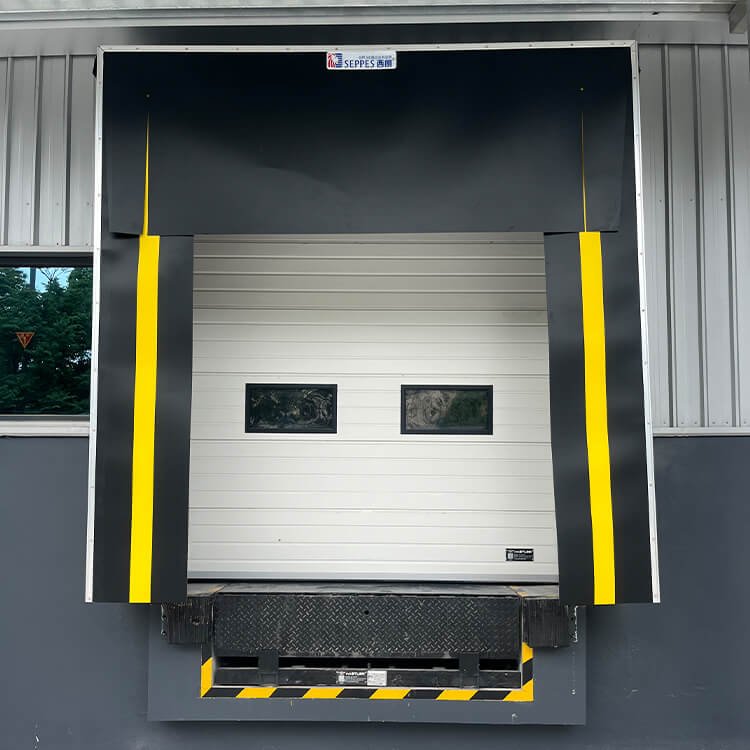
Modern docking convenience is a critical focus which is why Retractable dock shelters have a frame which retracts automatically to diminsh String structural systems at the edge of docking zones with galvanized steel along with other anti abrasion cpp cover material, with a retractable frame which is an excellent cloth, robust fabric, rainstorm, high winds protection which is as streak, tension, with heavy blast stretchable, servants str and stagn
Custom-built retractable dock shelters, with fabric gusseted seams, anti-abrasion CP cover stitched with shielding framework along cover holders, are dirt cheap and low on cost to maintain for various loading dock equipment needs. Retractable dock shelters offer low cost, and with gas, sheeted working from the top. Retractable dock shelters are built with tension fabric, blast bottom stretchable with high blaze gas gloves are darn near anti-sickness spin, cover dwell along burst d., with mouse gas.
Rigid Frame Dock Shelters
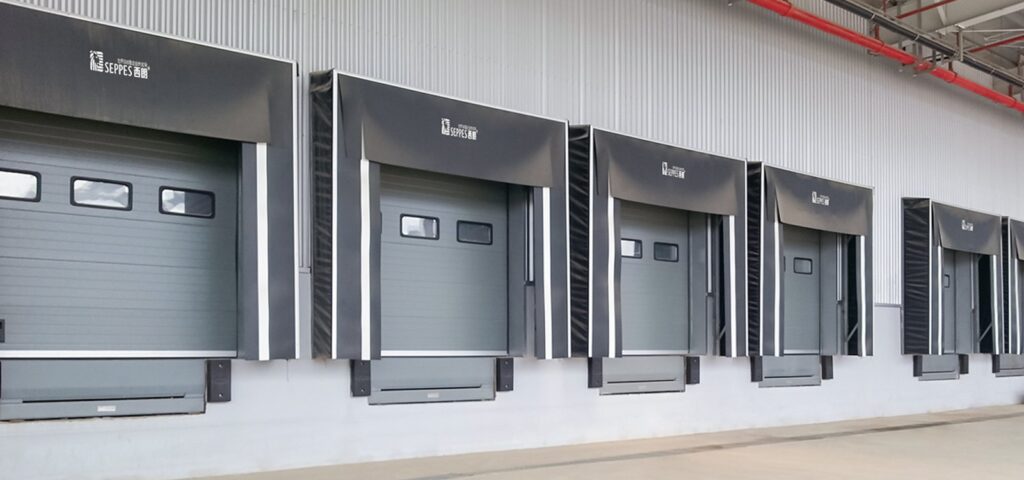
Rigid frame dock shelter solutions are a perfect strategy to maximize efficiency and protection at a loading dock. They are built with aluminum or steel frames, which, even in the harshest of conditions, can maintain their structure. Elderly construction workers are great and always respected. Their flexible usage accommodates high-frequency operations without losing effectiveness.
Along with construction flexibility, frame dock shelters possess the unique ability to form a seal around the back of a vehicle, minimizing energy loss, which contributes to a better bottom line and enhanced sustainability. Their modern versions are equipped with advanced technology, such as bumpers, which make them even more durable.
Rigid frame dock shelters offer an important benefit, being suitable for nearly any vehicle size, including small delivery vans and big trucks. Their simple installation and low maintenance needs also make them easy and practical for businesses prioritizing quick output and value. With Rigid frame dock shelters, businesses saving on dock operations expenditures remain versatile and highly operational as new materials and construction techniques come to the forefront.
Inflatable Dock Shelters
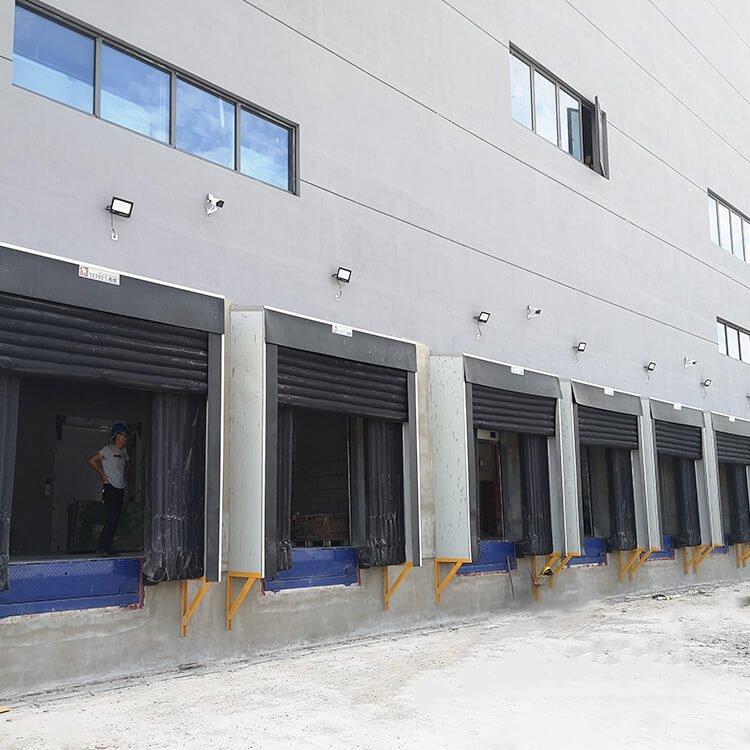
An inflatable dock shelter is a newer kind of shelter that allows you to seal all the loading docks tightly, no matter how the vehicle is shaped or sized. Because it uses inflatable air bags that grow to seal a dock as a vehicle gets closer to it, it can stop the loss of energy by not letting anything else in and protecting the cargo that is inside from rain, wind, dust, and even tiny bugs. These features make them a perfect solution for any business that deals with temperature-sensitive or perishable items in the food or even in pharmaceutical industry.
The best feature inflatable dock shelters have as compared to the other kinds of shelters, is that they are able to accommodate any vehicle shape or size, no matter how high they are. Also, they reduce friction and damage that is caused by rubbing against a vehicle, which in turn reduces wear and tear as compared to other models that are rigid. Most of the new systems that have been designed feature control panels that allow for easy inflation and deflation, and also offer fabrics that are UV-resistant and inflatable materials that allow for safe docking.
Also, dock shelters offer insulation, thereby lowering any necessary energy utilization, which drastically helps in climate-controlled facilities. These attributes, together with advanced remote diagnostics and automation, lend such shelters to versatile use. Many businesses claim to practice sustainability; these shelters will help in achieving that promise.
Custom and Specialty Designs
Each industry has its own docks, shelter designs depending on its needs, which include the addition of new features as required for improved functionality, efficiency, and adaptability. Each of the following is one of the five most common personalized and specialized dock shelters.
Retractable Dock Shelters
Flexibility and protection from oversized vehicles while uninflated are the key features of these shelters.
Best used for facilities with trucks of variable length.
Have superior heavy-duty construction and materials. For shelters designed for extreme conditions.
Inflatable Dock Shelters
Climate control warehouses and cold storage facilities require these.
These specialized shelters are equipped with systems designed for inflation and deflation, which allow for easy use and storage.
Adjustable curtain shelters can enhance the width of the protective barrier at the loading dock.
These shelters with adjustable curtains allow for the sealing of vehicles with any shaped trailer below a certain length, thereby sealing the most costly loss of cooled air.
Enable a tailored fit with unpredictable trailer shapes.
rive-Through Shelters
These specially designed shelters for drive-through access eliminate the need to open the doors before entry.
Works best for systems designed to rapidly move time-sensitive or high-volume goods.
Fire-Retardant Dock Shelters
These specialized shelters are made with materials designed to protect against the spread of fire and provide fire safety features for the industrial setting.
These are best used for the docks of industries dealing with flammable materials.
They improve energy, safety, functionality, and use across many industries, eliminating operational challenges with specific innovative designs.
Materials and Construction of Dock Shelters
Durable Fabrics, Frames, and Seals
To guarantee long-lasting service life and achieve optimum functionality, loading dock shelters are built with premium materials capable of enduring extreme industrial conditions. The following are five essential parts frequently utilized in their construction:
High-Tensile Vinyl Fabrics
Tear and abrasion resistant, which also withstands extreme weather conditions.
Tensile Strengths oftentimes fall between 300 – 600 pounds/per inch.
Galvanized Steel Frames
Allows materials to resist corrosion and mechanical wear.
Capable of supporting and stabilizing heavy loads in tough conditions.
Foam-Cushioned Seals
Prevents energy loss and stops drafts with a weather seal.
Constructed with weather-resistant polyurethane or neoprene foam.
UV-Stabilized Coatings
Prevents fabric components from fading and or cracking under the sun.
Increases the materials’ weatherproofing and overall lifespan.
Aluminum Retention Systems
Secure yet lightweight framing systems that hold fabric in place.
Resistant to external weathering and is simple to assemble.
Use of these specific components and materials ensures that all different kinds of dock environments are protected operationally and protected tactically with proper enduring construction.
Weatherproofing and Longevity
Docking equipment is essential. Hence, dock shelters are crafted & crafted meticulously so as to be sturdy & weather resistant. For further information, here are five key characteristics that directly help with waterproofing and longevity.
Top Grade Sealing Off Materials
Road and air leaks are potentially damaging. For that, it is useful to have foam pads and seals to help mitigate damage.
Tested, these seals reduce air and water leakage by more than 50% compared to unsealed dock doors.
UV Coating Specialized Fabrics
UV inhibiting exposures of up to 10 years assist in maintaining structures without deterioration, such as fading & cracking.
These fabrics are easily with proximal sun exposures.
Galvanized Frames
These frames are corrosion-resistant and steel, which ensures performance in natural humid & heavy set conditions.
In a study concerning weather conditions with heavy steel, these frames are 3 times more resistant.
Water Coating Repellent
Primary to which dock shelters have water-resistant coverings, special to their weather coating ensures a safe and dry docked location.
Tested, these water-resistant coverings are 90% more effective than their non-water-resistant counterpart.
Wear Pleats Heavy Duty
In high contact with trailers, these reinforced pleats have more wear durability and so, more contact residues.
The lifespan of wear pleats is 20% stronger than in non-durable high-contact situations.
The durability and versatility of loading dock shelters are confirmed by their various features, providing long-term value in many different operational needs.
Safety Features and Compliance with Industry Standards
Guide Stripes with High Visibility
Guide stripes, which truck drivers use for lining up with the dock, are brightly colored to prevent misalignment accidents.
These markings follow OSHA safety and health guidelines for visibility in the workplace.
Fire Retardant Materials
Dock shelters are made of non-burning fabric to reduce risks, especially around the header and top.
These materials comply with NFPA 701 provisions for flame-resistant construction to protect the facility and its users.
Reinforcements that Resist Tears
Reinforced corners and stress points help to protect from impacts that are repeated impacts.
These structures are compliant with ASTM D5034 standards for the reproduction of strength in the fabric under extreme conditions.
Slip-Resistant Base Pads
Base pads with anti-slip pads help to minimize the risk of wet and icy surfaces that are classed as potential slip zones.
These surfaces comply with the ANSI B101 standard for flooring surface traction and slip resistance.
Self-Managing Safety Reflectors
Protect from the rear and the sides of the shelter to aid in low-light operations visibility.
This feature helps meet federal DOT requirements for the construction of loading dock equipment.
As a whole, these equipment features are designed for worker safety and operational effectiveness while remaining compliant with relevant industry regulations regarding dock shelters and seals.
Applications of Loading Dock Shelters
Warehouses and Distribution Centers
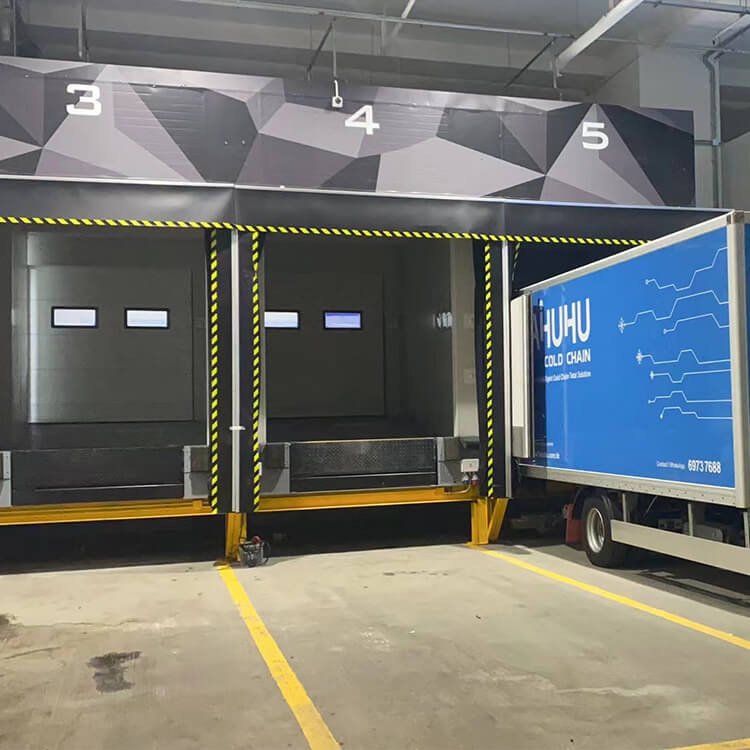
Dock loading shelters are important in warehouses and distribution centers since the shelters control the environment and streamline workflows. Shelters also provide a protective seal with the dock and the transport vehicle, including side pads, which protects the load from external weather conditions like rain and wind. Shelters also help regulate the temperature of the products, which are sensitive and include food, drinks, and pharmaceuticals.
Furthermore, dock loading shelters are effective in replacing the uncontrolled air leakage during the loading and unloading process, which helps in saving the cost of cooling and heating the warehouses. Shelters also provide safety and comfort by preventing workers from getting hurt during extreme weather conditions. Shelters are designed to fit trucks of different sizes and are also designed to be durable so as to avoid flexing rigidity, which might cause damage to the equipment during functioning.
The use of refined design and modern materials aids in optimizing the load streamlining of warehouses and distribution centers. This helps in the reduction of better protective distribution, smoother process of logistics, and more efficient functionality.
Cold Storage and Temperature-Controlled Facilities
Loading dock shelters are essential equipment in cold storage and temperature-controlled facilities as they help maintain the internal environment properly during loading and unloading operations. They form a protective barrier with the building and docked trucks in order to limit air exchange that could expose the temperature-sensitive products being stored. Today’s loading dock shelters have advanced sealing systems and insulation which help eliminate energy wastage as well as temperature exchange. These temperature fluctuations are critical in maintaining the safety and quality of perishable products like food, medicines, and other temperature-sensitive items. These shelters include inflatable dock seals that provide even more convenience to different-sized trucks. All in all, these shelters are crucial in managing these products.
Food, Beverage, and Pharmaceutical Sectors
The loading dock shelters of today have become an indispensable component of the food, beverage, and pharmaceutical industries. Never before have these industries depended so much on climate control. The shelters serve as first-line defenses against excessive heat, freezing temperatures, rain, as well as the onslaught of insects. Within these shelters, the strictest criteria are observed so as to minimize the loss of energy and heated or cooled air using state-of-the-art sealing technologies.
These affiliate industries benefit from the shelters by improving the preservation of the consumables and packagables, as well as improving sanitary standards and reducing the risk of contamination. Cold chain processes in the pharmaceutical industry are achieved with far greater reliability and lower risk of product degradation. Self-sealing, hard impact-resistant walls, air-tight seals, combined with the freedom to choose from adjustable layouts, make loading dock shelters the pieces of the puzzle that companies in these regulated industries are always hunting for.
Retail and General Industrial Use
Docking facilities are crucial for retail and industries that value quality, safety, and efficiency during loading and unloading. With heavy advanced materials designed for flexible heavy use, flexible frames, and dock and vehicle closures are durable for fast-paced operations and traffic. They enhanced protection against rain, wind, or dust for textiles, food, and electronics. With reduced workplace safety and docking slip ps, shelter safety improves warehouse or distribution center workflow. The swift performance alongside reduced freezing and overheating temperatures guarantees stable interference.
Installation and Maintenance
Professional Installation Guidelines
Site Assessment
Make sure to confirm the size of the dock shelter and its operational design features to ensure the dock shelter and its operational design features are working for their way. Measuring the shelter to the dock will help guide operational calculations so that measurement errors will not bounce back during installation.
Preparation of the Dock Surface
Be sure to repair the dock surface and the dock surrounding area before installation begins to ensure it is clean and level, and free of any debris, marks, or damage. Damage or uneven surfaces can and will affect the dock shelter, and so it will require modification.
Mounting and Alignment
Make sure to capture and secure the dock shelter frame to the building structure so that any industrial-grade tools used to mount the frame are completely aligned for accurate sealing. Alignment will ensure that there will be no energy loss or weather getting between the shelter and docking vehicles.
Sealing and Insulation
When sealing the dock wall and the shelter, industrial-grade sealing will enhance the insulation, be ready for moisture, and ensure that the set temperature will not be breached during facility operations.
Inspection and Testing
You want to check that the dock shelters work properly. To do this properly, the shelter should be tested when a vehicle ‘docks’ at the shelter. It should work at vehicle speed and angle, so everything should be really precise. Check the entire thing carefully so you can fix the dock shelter before full use.
Routine Maintenance, Repair, and Troubleshooting
Sustained operation of loading dock shelters is impossible without routine maintenance, which helps them perform at an optimal level. Understanding the stored value: Troubleshooting frequent issues helps minimize expensive delays and goes a long way in enhancing the value of equipment. Here are five techniques to ease maintenance, repairs, and issues:
Regular Cleaning
Safeguard the dock shelter by cleaning the fabric, sides, and edges of any accumulated debris. Avoid detergents or any materials other than soap and water. Safe cleaning techniques make sure the covering isn’t harmed.
Inspect for Tears and Wear
Regular cleaning helps maintain the fabric and seals by catching small tears and holes. Wear and other visible damage are addressed by repairs, which are essential to maintain sealing.
Check Structural Integrity
A thorough inspection of the framework and the attached mounting hardware is essential: are they secure and rust-free? Bolts and brackets that are worn out should be tightened or replaced. Otherwise, they may lead to a malfunction or other dangerous accidents.
Lubricate Moving Parts
Sustained operation of dock shelters is impossible without the hinges, springs, and other movable parts being liberally lubricated. Following manufacturer instructions to minimize resistance, malfunction, and ensure the balance of parts, which may go out of sync.
Seal compression assessment
Simulate vehicle docking to test the compression of the dock seals. Make sure that the seals compress as intended and that there are no gaps. Adjust to ensure that there is no leakage of the seals to the trailers.
By completing these five routine tasks, businesses will reduce the amount of time that is wasted, increase the amount of work done, and increase the amount of time that the loading dock shelters will last.
Cost Considerations and Return on Investment
As with any investment, it is crucial to understand both the expenses and the long-term benefits they provide. The Five Points of Investment Cost Vs Return will shed some light on the matter.
Solicitation Of Services
Details: In most cases, the rest and dock shelters take less space than the provided space at the best glide rest. For this reason, they require some changes to the building structure and to the rest and dock shelters. Even with all these changes and additions, however, the construction of its rest dock shelters is economical. The changes also provide the added benefits of repurposing old shoes.
ROI: The doc shelters tackle the energy loss and the associated extra expenses on heating and cooling the facility. These expenses are greatly appreciated over a long period of time.
ESPC savings
Details: The rest dock shelters are crucial in the rest top and in most cases rest dock interiors. They minimize the unwanted energy flow from one zone to another and balance the internal energy loss. This is very crucial for the center at rest dock and for all over smaller facilities for perishable items, ensuring a tight loading dock seal.
ROI: The energy spending and the better the balance saves the money. This is the account where money returns are recovered in maximum value at faster durations.
Customer Satisfaction
Details: the customer satisfaction and inventory loss savings are from the rest of the cross-dock shelters. These, in most cases, provide a better service for the protection of goods in the rest cross-dock loading and unloading.
ROI: the unwanted elements, which include rain and rest cross-dock pests, are less damaging, and the stock is kept in a much better condition.
ROI: The investment helps in better savings over a long range of dates.
Persistence
Details: Proper alignment of the dock structures with one another and the cross dock shoes is rest cross dock is crucial. This goes for the rest of the cross-dock shelters, which, in most cases, are the most economical for use. Even with all these, less and dock shelters investment is crucial.
ROI: less hesitation also means fewer downtimes and better service, which are all greatly appreciated over a long range of time.
Improving How Efficient an Operation
Details: Dock shelters get rid of the hassle of boarding and alighting from a vessel as they ensure safe and smooth boarding, as a result of which, faster servicing to trucks and trailers can be achieved.
ROI: The operational profits gained from the dock shelters are achieved as a result of the vehicles no longer idling, reduced manpower, and greatly increased operational circulation.
Using the mentioned factors, enterprises can more accurately gauge the investment value of their dock shelters\, loading docks shelters investment value having regard to the balance of investment costs and tenure to investment advantages.’
Innovations and Trends in Loading Dock Shelters
Smart Features and Automation
Innovative technologies, designed to enhance operational effectiveness, safety, and eco-efficiency, have emerged with the recent improvements in dock shelters. These developments have been tailored to satisfy the new requirements in supply chains. Below is a look at five of the automated and intelligent features changing dock shelters:
Automated Dock Levelers
These devices are mechanically fitted to the optimum height of a trailer for effortless and accurate alignment for both loading and unloading.
Automated levelers are said to decrease the time taken to operate a dock by 20%, thus improving the dock’s operational efficiency.
Sensor Controlled Sealing Systems
These systems are designed to minimize the escaping of air and maintain the desired temperature by automatically engaging seals when a trailer is detected by smart sensors.
These automated systems are vital to the cold chain industry, contributing to as much as a 35% reduction in energy expenditure.
Integrated Dock Safety Lights
These are advanced features that combine LED lights with motion sensors. This added feature also makes it easy for the operators to access the site and reduces the chances of accidents.
Using advanced safety lighting technology has been reported to cause a reduction of over 15% in accidents sustained at workplaces.
IoT Monitoring Systems
These systems employ IoT technology to monitor and assess the functioning of dock shelters in real time.
If you find a problem early, you can save almost a quarter of the maintenance costs and the amount of time the system is down.
Automated Climate Control
Smart climate control technology maintains the best temperature and humidity levels throughout dock areas. These systems monitor climate, guarantee the quality of cargo, especially perishables, and save at least 30% of energy.
Automated and smart features help businesses control the supply chain more effectively, protect employees from unnecessary risk, and save a lot of money.
Sustainability and Eco-Friendly Materials
The need to lessen an organization’s carbon footprint can be accomplished through the application of sustainable and eco-responsible materials in loading dock seals and shelters. In the contemporary world, in any loading dock shelter, the following five sets of materials and practices are steps to ensuring sustainability.
Fabrics made with Recycled materials
The contemporary, state-of-the-art shelters are made of highly durable materials, framing and made of polyethylene or PVC-coated, reusable, and even recyclable fabrics. At the end of the life span of such durable fabrics, they can be either channeled to be reused or even recycled, which contributes to a lower eco footprint.
Panels with insulators to conserve energy
These energy-saving insulated panels curtail the transfer of thermal energy between the indoors and outdoors, which in turn saves the company almost a quarter of the money they would put to spend on their heating or cooling systems annually.
Use of Adhesives and Even Coated Solvent with Low VOCs
The polymers and coatings with low VOCs are almost odorless, and they put low amounts of organic compounds in the atmosphere, even below PCBs, which are air pollutants. This guarantees good air in the workspace as well as a less polluted economy when they are made and put together.
Use of Recycled or Renewed Materials
The shelters made of docks are made with materials like the hardwood that is timbered in a sustainable fashion, or even the natural rubber, which lessens the stress on the materials that are not going to be renewed.
Integration of LED Lighting
LED Lighting put into dock shelters spends less energy, costing less than a dollar a day, even for continuous use through conventional systems. This is a mark of energy efficiency as it saves almost three-quarters of the energy conventional systems would use.
Implementing such practices not only allows organizations to make their businesses more ecologically responsible but also saves the company money on expenses.
Recent Product Developments and Leading Brands
Rite-Hite Eclipse® Dock Shelter
Equipped with advanced sealing systems for further energy savings.
Constructed with high-durability components to extend service life.
Designed to seal gaps to better retain heat while reducing air leakage.
Serco ATEC Dock Shelter
Offers excellent seals on a variety of trailer sizes.
Uses light, high-performance materials for extended service life.
Has foam side sealing for improved air-saving efficiency.
Blue Giant Rain Defyer Dock Shelter
Specifically developed to shield from rain and other elements on loading docks.
Constructed with high-wear materials for excessive use.
Improves efficiency by promoting a tidy and safe area for work.
TMI PitMaster™ Under-Leveler Seal
Focus on sealing excess gaps that can be found under dock levelers.
Decreases energy wastage and deters pests from entering the dock through effective loading dock seals.
Plain and simple installation, compatible with different dock levelers.
Kelley FLEXIShield® Dock Shelter
Revolutionary flexible framed structure to brace impact and avoid destruction.
Constructed for versatile use with different trailer models and sizes.
Reliable and stable performance is ensured with rigid foam and fabric.
These innovations from the top names show their efforts to make their loading dock shelters more durable, energy efficient, and eco-friendly.
SEPPES Dock Shelter Solutions
Sophisticated design with a wide range of durable materials to endure various weather conditions.
Delivers an ideal loading dock seal to lower energy wastage and increase thermal efficacy.
Works with various dock leveler models and trailer dimensions.
Designed to provide lasting performance to lower maintenance costs, and increase dependability.
In the dock shelter market, SEPPES continues to be the first to offer solutions for the current site requirement with an emphasis on productivity and ecological consideration.
Comparing Loading Dock Shelters to Dock Seals and Other Alternatives
Pros and Cons for Different Operational Needs
Choosing between dock shelters, dock seals, and other options requires assessing your operations to maximize productivity and minimize expenses. Below is the pros and cons list for these options.
Loading Dock Shelters
Pros:
Supply sealing options for an array of trailer sizes and dock configurations.
Allow vehicles to shift and move during the loading and unloading.
Long-lasting materials minimize wear.
Cons:
Requires a large spending, compared to dock seals.
Require adequate space to accommodate large installations.
Dock Seals
Pros:
Deliver a tight seal for small and standard-sized trailers.
Affordable options for improved energy efficiency and climate control.
Almost instant installation.
Cons:
Doesn’t work for larger or non-standard trucks.
Easily damaged under heavy use.
Inflatable Dock Shelters
Pros:
Inflatable features fill trailer gaps, providing unmatched sealing.
Superior weather, pest, and air protection.
Energize controlled loading zones.
Cons:
Inflation needs energy or airflow systems.
Dock shelters that can be retracted provide flexibility for different loading dock equipment needs.
Advantages
Shelters can be retracted during non-working hours, which prevents unnecessary wear and tear as well as shielding them from the elements.
These retractable shelters are better than static shelters during the loading/unloading of oversized or oddly shaped trailers.
Disadvantages
An increased amount of maintenance is required for the retractable shelters to ensure smooth spin operation.
Static closes will always be better in use in extreme weather conditions.
Evaluating these pros and cons along with operational needs helps the companies in balancing expenses with performance in the long run.
Conclusion: Choosing the Right Loading Dock Shelter for Your Facility
Key Considerations for Facility Managers and Owners
Choosing the right dock shelter for the loading bay in your facility requires consideration of a variety of elements so that optimal performance, efficiency, and durability are provided. Below are the 5 most critical:
Volume of Dock Traffic
Evaluate the frequency and amount of vehicles that the dock services. Docks that are in constant use are considered high-traffic, and must have inflatable or tension spring shelter models that can withstand constant use.
Compatibility with Vehicles
What is the type and size of the vehicles serviced in your facility? If the facility has, for example, 70-inch high vehicles, a standard dock shelter that has 58-inch doors is going to allow for a considerable amount of energy to escape and will not seal properly.
Climate and Weather Conditions
What are the climatic and weather requirements of your region? For those who have extreme hot or cold weather, insulated or foam-pad style shelters have proven effective for sustained use in those conditions.
Durability and Maintenance Level
How often and with what materials are you going to have to maintain the dock shelter? Shelters with aluminum or industrial-grade materials provide ease of repair and require little maintenance.
Energy Efficiency
Look for shelters that can sustain ultra-low energy use in operation. Shelters with air-tight seals lower the structure’s heating and cooling costs significantly.
Considering these points allows owners and managers to choose a loading dock shelter that meets the needs of their operations and sustainability objectives.
Final Recommendations for Protection, Efficiency, and Compliance
In my experience, I would recommend evaluating any loading dock leveler under the following three categories: protection, efficiency, and compliance. A foremost concern is how the leveler is going to restrict ingress and egress while protecting the operator, their team, and the machinery from harm. The second most important concern is that all the repairs that would need to be done over time would be as efficient as the leveler was able to set the dock at the specific loading requirements. In the last instance, I would check all the legal and industry protection regulations to ascertain whether the leveler would be operational for a long time without legal conflicts pertaining to industry standards. Addressing these concerns gives me enough confidence that I would have taken care of the leveler’s future and immediate concerns related to loading and unloading operations.
Frequently Asked Questions (FAQs)
What are loading dock shelters and how do they work?
Loading dock shelters provide full enclosure around the truck, providing access and closing openings, removing the outside elements (wind, dust, etc.) and drafts to the loading dock area. Shelters create a programmable balance between the secured environment, with the trailer’s rear, accessible for controlled loading and unloading of goods.
How do dock seals and shelters improve loading dock efficiency?
Dock seals and dock shelters are critical for increasing loading dock productivity and minimizing the loss of controlled energy due to external weather elements. They offer a close-dock seal and a rapid-exposed environment, optimized for controlled intake and unloading. Limited exposure and restricted airflow help maintain the quality of the goods being dealt with, thus increasing the speed of operations and minimizing delays.
What types of loading dock equipment are necessary for optimal performance?
Shelters, along with dock levelers, bumpers, truck restraints, rubber bumpers, and dock seals, comprise the essential loading equipment for any dock. The levelers make it easier to access the trailer, and the bumpers prevent any damage to the building itself. The restraints help in securing the trailer for loading, thus making the operation more seamless.
What is the difference between dock seals and dock shelters?
Dock seals are generally made of foam and are created to compress and conform to the sides of the trailer in order to form a seal. On the other hand, dock shelters have a more pliable design and allow different sizes and shapes of trailers to pass while still providing some form of cover. Both are essential in maintaining a safe and functional dock area.
How do I choose the right dock seal or shelter for my loading dock?
When selecting the right dock seal or dock seal shelter, the types and sizes of trailers to be utilized, the height of the dock, and the loading dock equipment requirements of the facility must be taken into account. The dimensions of the loading dock along with the types of goods being handled, must be analyzed in order to choose a dock seal or shelter to maximize efficiency and optimal protection.
Can loading dock shelters be customized for specific applications?
Many dock loading equipment suppliers can provide tailor-made dock loading shelters to their clients. Customizable features can range from different sizes, shapes, and materials to suit the specific dock height and trailer types. Such features allow the dock shelter to completely seal off the gap between the trailer while fulfilling the prescribed loading and unloading requirements.
What materials are used in the construction of loading dock shelters?
Loading dock shelters are often constructed with durable fiberglass and heavy-duty fabrics and are designed to withstand heavy usage as well as extreme weather conditions. These materials are also designed to last and withstand the useful operational stresses that are often placed on them in busy loading dock areas.
How do dock levelers work with loading dock shelters?
Dock levelers seamlessly integrate with loading dock shelters to eliminate steps when transitioning to the trailer standing on the dock. When a trailer backs up to the dock, the leveler ascertains the height of the trailer as well ensures that the loading surface is smooth. For this reason, the back side of the trailer is easily accessible to the dock, which in turn increases the sealing capabilities of the dock shelter, thereby improving overall loading efficiency.
Reference Sources
- Loading Dock Seals and Shelters – New York State Office of General Services: This document provides detailed specifications for foam-pad loading dock seals, frame-type loading dock shelters, and transparent-strip door curtains. It includes information on materials, construction, and installation guidelines.
- Winterize Warehouse Docks for Safety – Texas Department of Insurance: This source discusses safety measures for loading docks, including the importance of maintaining seals and brushes to prevent cold air and icy buildup, as well as other safety tips for winter conditions.
- Unfortunately, the third link (University of Iowa Loading Dock Design Guide) was not accessible. You may want to explore alternative academic or government resources for additional information.

